Why Chinese Medicine Reaches for Pears in Autumn
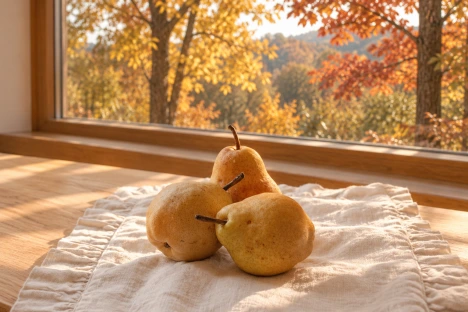
The first sign of autumn isn't always a changing leaf. Sometimes, it's the scratch in your throat when you wake up or the dry feeling in your nose after a night with the heat on.
In Traditional Chinese Medicine (TCM), autumn is associated with dryness. And one of the season's most familiar food traditions begins with something you probably pass in the grocery store every week: the pear.
The Season of the Lungs
In Chinese medicine, autumn belongs to the Lung system and an environmental influence known as Zao, or dryness. Just as leaves lose moisture and the air turns crisp, TCM describes how dryness may affect the body, particularly the nose, throat, and skin.
The Lung system is traditionally said to govern Qi (vital energy), support the body's protective functions, and help regulate the movement of fluids. When dryness becomes prominent, symptoms such as an irritated throat, dry nasal passages, or a cough with little mucus may be interpreted through this traditional framework.
Unlike the lungs described in modern anatomy, the TCM Lung system encompasses a broader set of functions. And while dry air can irritate the upper airways, allergies and infections can produce similar symptoms, so dryness isn't always the explanation.
Why the Humble Pear?
Chinese food therapy considers ingredients not only for their nutritional value but also for their traditional qualities. Some foods are described as warming, others as cooling, drying, or moistening.
Pears fall into the cooling and moistening category. In TCM, they're traditionally said to nourish Yin and generate body fluids, qualities associated with addressing dryness.
But here's the interesting part: a fruit considered cooling is often served warm.
In Chinese households, pears may be steamed or gently simmered, sometimes with rock sugar. The Hong Kong Department of Health describes this preparation as a traditional food for Lung dryness. In TCM, a food's warming or cooling nature refers to its traditional properties, not simply the temperature at which it's served.
Modern nutrition offers a different perspective. Pears contain water and dietary fiber, especially when eaten with the skin. They're a nutritious food, although there's no good evidence that eating pears treats coughs or respiratory illnesses.
What makes the tradition special is how an everyday fruit becomes part of a seasonal approach to food and well-being.
From the Kitchen: Warm Stewed Pear
As the pear simmers, its flesh turns tender and the cooking liquid takes on a delicate sweetness. It's a simple way to enjoy a traditional autumn preparation without needing a long list of ingredients.
Ingredients
- 1 ripe Asian pear (or regular pear)
- ½ cup water
- Up to 1 teaspoon rock sugar (optional)
Instructions
- Wash the pear, remove the core, and cut it into chunks.
- Add the pear and water to a small covered saucepan.
- Add rock sugar if desired.
- Simmer gently for 10–15 minutes, until tender.
- Let cool slightly and serve warm with a little cooking liquid.
The pear is naturally sweet, so you may not need added sugar. Enjoy it as a comforting seasonal food rather than a medical treatment.
Bringing the Tradition Into Everyday Life
The idea of responding to the season doesn't have to stop in the kitchen. As temperatures drop and indoor heating becomes more common, paying attention to your environment can be useful, too.
If the air at home feels dry, consider checking indoor humidity. A range of roughly 30–50% is generally recommended. A properly maintained humidifier may help, but regular cleaning is essential to prevent mold and microbial growth.
For dry nasal passages, a plain saline spray may provide temporary comfort. If you use a sinus rinse, choose only distilled, sterile, or previously boiled and cooled water.
Of course, not every dry throat or cough is seasonal. Persistent or worsening symptoms should be evaluated by a healthcare professional, and difficulty breathing or chest pain requires urgent medical attention.
An Old Tradition for a Changing Season
A pear is easy to overlook. It sits among dozens of other fruits, familiar enough that we rarely think twice about it.
Yet in Chinese food therapy, that same pear has a place in a much larger tradition of observing nature, understanding seasonal patterns, and choosing foods with intention.
At Evoke Acupuncture, we value these traditional perspectives alongside appropriate modern medical care.
So when autumn arrives, and the air begins to change, perhaps the humble pear deserves a second look, not as a miracle cure, but as a small piece of seasonal wisdom that has traveled from generations of kitchens into ours.